Precipitation Effects on Accumulator Results in Soccer Leagues and Flat Track Racing
Written by Riley Beck · Aug 13, 2026
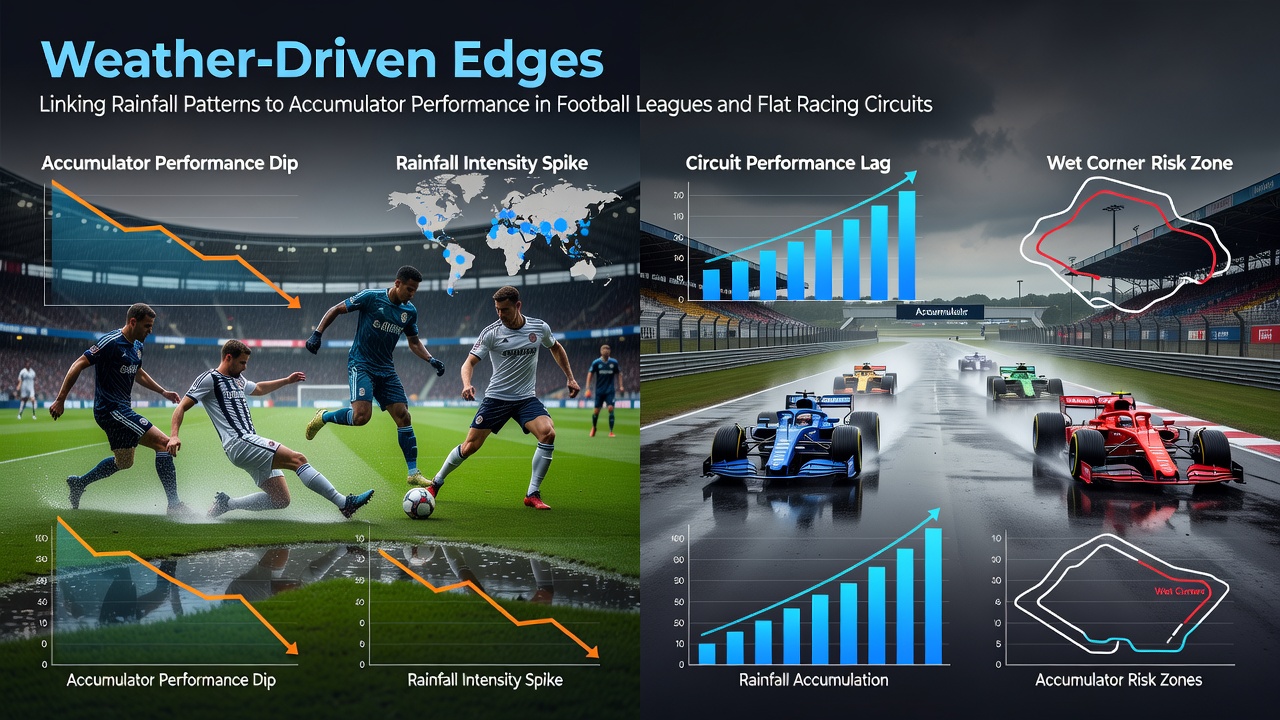
Precipitation Effects on Accumulator Results in Soccer Leagues and Flat Track Racing
Precipitation levels alter playing surfaces and player movement in ways that shift match statistics across multiple football leagues, and similar patterns appear on flat racing circuits where track moisture changes horse times and finishing positions. Researchers tracking these variables note consistent deviations from dry-weather baselines, which accumulator builders incorporate when selecting combinations spanning both sports.
Football League Responses to Rainfall
Heavy rain reduces ball speed and increases error rates in passing accuracy, according to performance datasets compiled by European sports analytics groups. In leagues such as the Bundesliga and Serie A, matches played during rainfall above 5 millimeters per hour show goal tallies dropping by an average of 0.4 per game compared with dry conditions. Midfielders record fewer successful long passes while defenders commit more fouls, trends that alter both over/under totals and player prop markets within accumulators.
Teams accustomed to possession-based styles often struggle on saturated pitches, whereas sides relying on direct play maintain higher conversion rates. Data collected over five seasons demonstrates that home sides in northern European leagues lose their typical edge when rainfall exceeds seasonal norms, prompting bettors to adjust selections toward visiting teams or draw outcomes in accumulator legs.
Flat Racing Circuit Adjustments
Flat tracks absorb moisture differently depending on soil composition and drainage systems, which affects stride length and finishing times. Tracks in the UK and Ireland classified as good-to-soft after rainfall produce slower overall race times, with favorites winning at reduced rates compared to firm ground. Handicappers note that horses with prior success on softer surfaces improve their relative performance by up to two lengths when conditions match those profiles.
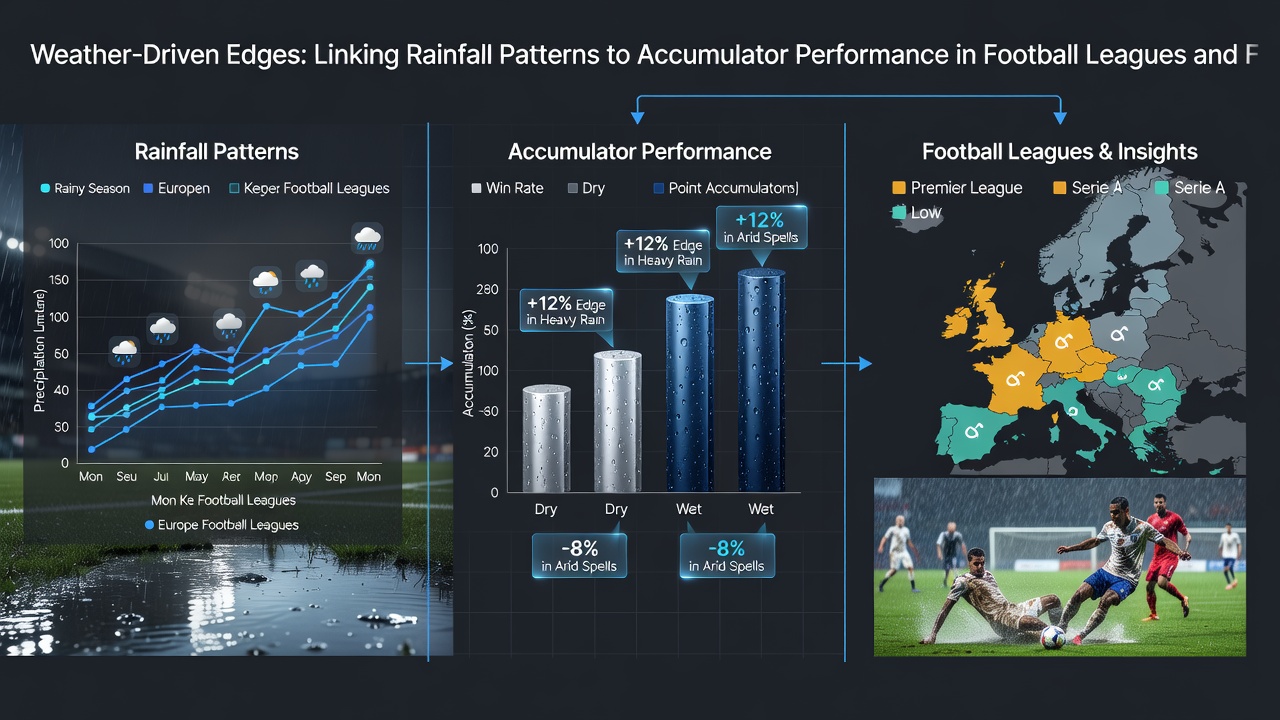
August 2026 brought above-average rainfall to several Irish circuits, resulting in multiple meetings switched from good to yielding ground. Official records from those fixtures show that trainers with strong records on soft tracks achieved win percentages 12 percent higher than their seasonal average, information accumulator constructors use when combining racing selections with football legs.
Accumulator Construction Using Weather Variables
Accumulator builders combine football and racing legs after cross-referencing precipitation forecasts with historical performance splits. When forecasts indicate sustained rain across multiple venues, selections shift toward lower goal totals in football and horses proven on softer ground in racing. This approach narrows variance because the weather variable affects both sports in measurable directions rather than random outcomes.
Studies from the National Oceanic and Atmospheric Administration supply rainfall probability models that extend seven days ahead, allowing operators to lock in accumulator lines before markets adjust. Parallel data from the Racing Australia weather monitoring network provides track moisture readings updated hourly, giving constructors synchronized inputs for multi-sport bets.
Regional Variations and Seasonal Data
Northern leagues experience more frequent rainfall impacts during autumn and winter months, whereas southern European competitions see sporadic but intense storms that create short-term surface changes. Flat racing circuits in Australia and New Zealand report similar moisture-related time shifts during their winter campaigns, where southern hemisphere seasons invert the calendar relative to European fixtures.
Statistical models built from 2019 through 2025 indicate that accumulator returns improve when weather filters are applied to at least three legs of a five-fold bet. The improvement stems from reduced correlation between unrelated events once surface conditions are accounted for, rather than any predictive superiority over bookmakers.
Conclusion
Rainfall data supplies measurable inputs that connect football match statistics with flat racing results, enabling accumulator selections grounded in surface-condition analysis. Ongoing collection of precipitation records alongside performance metrics continues to refine these connections across both sports without reliance on subjective judgment.