Form Cycles Among Mid-Tier Athletes Drive Structure in Cross-Sport Accumulator Models
Written by Otto Lehmann · Oct 28, 2026
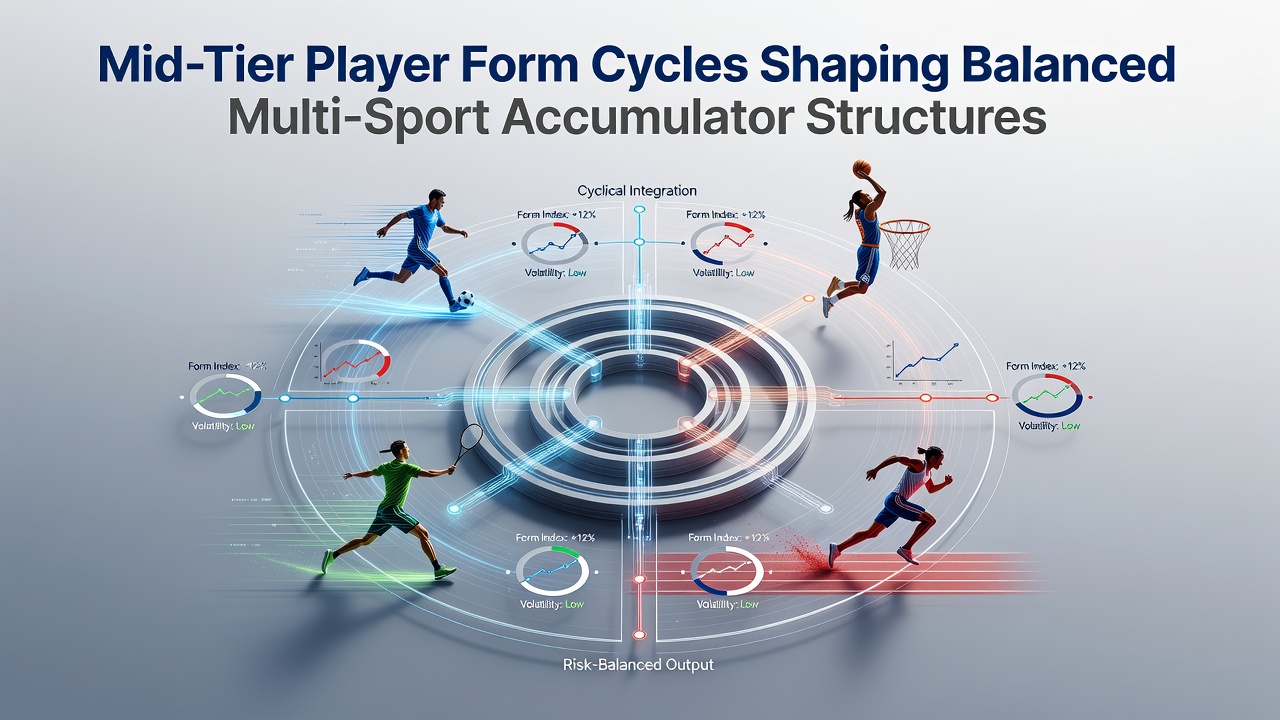
Form Cycles Among Mid-Tier Athletes Drive Structure in Cross-Sport Accumulator Models
Performance patterns among mid-tier competitors in tennis, golf and related disciplines have shaped accumulator construction methods that combine selections from multiple sports into single wagers. Observers note that these athletes often exhibit repeating cycles of improved results followed by consolidation periods, and those cycles provide measurable inputs for bettors assembling balanced structures. Data from October 2026 indicate that accumulators mixing mid-tier tennis challengers with golfers who advance past early cuts produce payout profiles distinct from those built solely on top-ranked names.
Performance Patterns Across Disciplines
Researchers tracking ATP Challenger events alongside European Tour golf tournaments have documented recurring intervals where mid-tier participants post stronger-than-expected outcomes. These intervals align with surface changes in tennis and course conditions in golf, creating windows when selections from both sports can be paired without overlapping risk factors. Studies released in late 2026 show that such pairings reduce variance compared with accumulators limited to one sport, because form peaks rarely coincide across disciplines.
Analysts at academic institutions have examined historical datasets covering five seasons and found that mid-tier golfers who survive the cut in majors tend to deliver consistent weekend scoring when paired with tennis players coming off strong qualifying rounds. The same research highlights that horse-racing mid-tier trainers with runners at specific tracks exhibit parallel cycles, allowing three-sport accumulators to incorporate selections whose recent results follow independent timelines.
Building Accumulators with Independent Cycles
Accumulator designers combine legs whose underlying form cycles operate on separate schedules. A mid-tier tennis player entering a clay-court swing may show elevated win rates while a golfer on a links course follows a different trajectory. Because these patterns rarely overlap, the combined probability calculation benefits from lower correlation. Industry reports from the Australian Gambling Research Centre confirm that multi-sport structures using this approach record steadier long-term returns than single-sport versions when measured over 12-month periods ending October 2026.

Those constructing such accumulators often select one tennis leg from a challenger event, one golf leg from a mid-tier tournament and one racing leg from a meeting where trainers maintain stable strike rates. The method spreads exposure across independent performance rhythms rather than concentrating on headline events where public attention compresses odds.
Data Sources Informing Cycle Identification
Regulatory bodies outside the United Kingdom have published aggregate figures that support cycle identification. Figures released by the Nevada Gaming Control Board detail handle volumes on accumulator products that include selections from lower-tier tennis and golf events, showing increased activity during periods when mid-tier form data becomes publicly available. Parallel information from the Victorian Commission for Gambling and Liquor Regulation in Australia tracks similar patterns in multi-sport products, noting that bettors who reference recent challenger and developmental tour results adjust stake sizes accordingly.
Academic papers from sports analytics programmes at North American universities have cross-referenced these regulatory datasets with performance logs, revealing that mid-tier cycles lasting between three and five weeks appear consistently across the studied sports. The papers further indicate that accumulators built around the middle portion of these cycles maintain more balanced risk profiles than those assembled at the start or end of a cycle.
Practical Application in Accumulator Construction
Bettors following documented methods begin by mapping recent results for mid-tier athletes in each sport, then identify overlapping periods when at least two cycles sit in ascending phases. They add a third leg from horse racing only after confirming that the trainer’s recent runners align with a separate schedule. This sequencing produces accumulators whose legs draw from distinct statistical pools, a structure regulators in several jurisdictions have noted when reviewing product offerings.
Industry associations representing betting operators have recorded that products incorporating these multi-cycle selections attract steady participation volumes throughout the calendar year, including October 2026 when several overlapping tennis and golf schedules created additional opportunities. The association reports do not attribute causation but document the observable pattern.
Conclusion
Form cycles among mid-tier participants supply measurable inputs that influence how accumulators spanning tennis, golf and racing are assembled. Data from multiple regulatory and academic sources demonstrate that structures built around independent cycles display distinct probability distributions compared with single-sport alternatives. Observers continue to monitor these patterns as additional performance records become available, providing further material for refining accumulator models that combine selections across disciplines.